Stress and Skin Health: How Stress Affects Your Skin and What You Can Do About It
Introduction
Stress is a normal part of life, but when it becomes chronic, it can affect far more than your mood. One of the first places stress often appears is on your skin. Many people notice breakouts before an important event, increased redness during stressful periods, or a dull complexion when they feel overwhelmed.
The connection between stress and skin health is stronger than most people realize. Scientific research has shown that emotional stress can influence oil production, inflammation, skin barrier function, and even the aging process.
In this guide, you’ll learn how stress affects your skin, why certain skin conditions worsen during stressful times, and the most effective ways to protect your skin while managing stress.
Table of Contents
How Stress Affects Your Skin
When you’re stressed, your body releases hormones such as cortisol and adrenaline. These hormones are helpful during short-term challenges, but chronic elevation can create several skin problems.
High cortisol levels may:
- Increase oil production
- Trigger acne breakouts
- Increase skin inflammation
- Slow wound healing
- Damage collagen and elastin
- Make skin appear tired and dull
Over time, chronic stress can contribute to premature aging and make existing skin conditions more difficult to manage.
Common Signs of Stress on the Skin
Everyone responds differently to stress, but some common skin-related symptoms include:
- Sudden acne breakouts
- Increased redness
- Dry or flaky skin
- Itching or irritation
- Dull complexion
- Dark circles under the eyes
- Fine lines appearing more noticeable
- Slower healing of blemishes
If you’ve ever experienced a breakout during exams, work deadlines, or emotional challenges, stress may have been a contributing factor.
The Link Between Stress and Acne
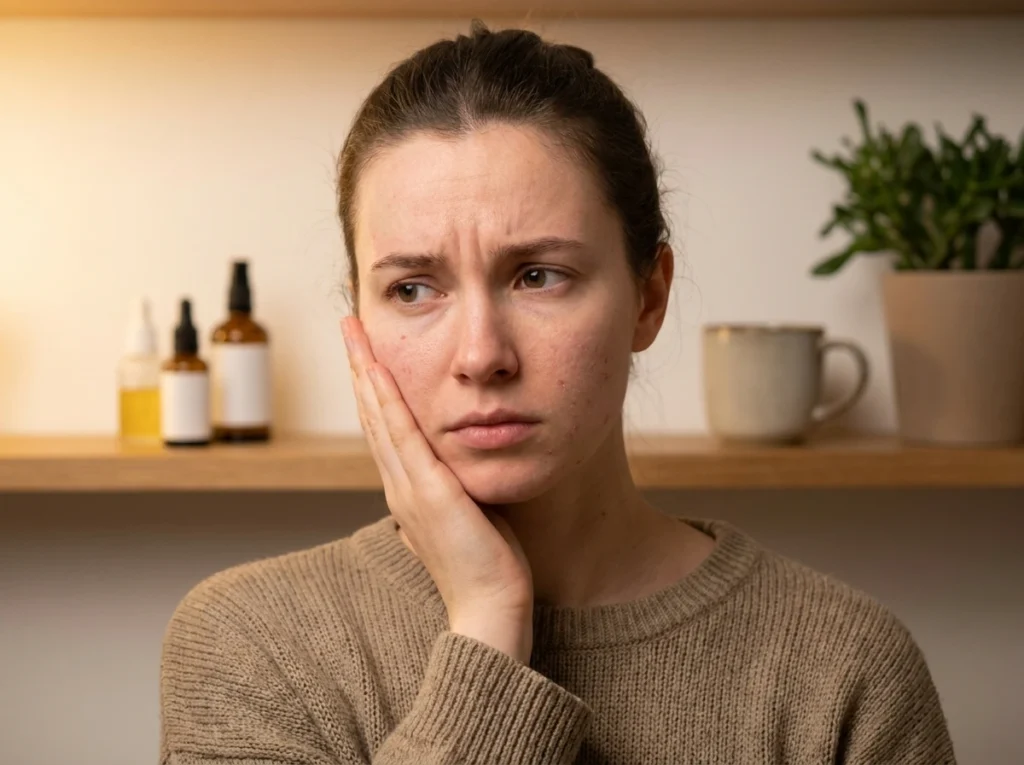
One of the most well-known effects of stress is acne.
When cortisol levels rise, the sebaceous glands may produce more oil. Excess oil can mix with dead skin cells and bacteria, leading to clogged pores and breakouts.
Stress acne often appears on the:
- Forehead
- Chin
- Jawline
- Cheeks
Many people also touch their face more frequently when stressed, which can transfer bacteria and worsen breakouts.
Stress and Premature Aging
Chronic stress doesn’t just cause pimples—it can also accelerate visible aging.
Research suggests that long-term stress may increase oxidative stress in the body, which can damage collagen and elastin fibers. As these supportive structures weaken, skin may become less firm and more prone to wrinkles.
Signs of stress-related aging can include:
- Fine lines
- Loss of elasticity
- Uneven skin tone
- Dullness
- Under-eye shadows
Skin Conditions That Stress Can Worsen
Stress can aggravate several existing skin conditions, including:
Eczema
Stress may trigger itching and flare-ups.
Psoriasis
Many people report worsening symptoms during stressful periods.
Rosacea
Emotional stress can increase facial redness and sensitivity.
Hives
Stress can contribute to outbreaks of itchy welts in some individuals.
How to Protect Your Skin During Stressful Times
1. Keep Your Skincare Routine Simple
When stress levels are high, avoid experimenting with too many new products.
Focus on the basics:
- Gentle cleanser
- Hydrating moisturizer
- Sunscreen
- Targeted treatment if needed

2. Prioritize Sleep
Your skin repairs itself while you sleep.
Aim for 7–9 hours of quality sleep each night to support collagen production, reduce inflammation, and improve overall skin recovery.
3. Stay Hydrated
Dehydration can make stressed skin look even more tired.
Drink water consistently throughout the day and use hydrating skincare ingredients such as hyaluronic acid.
4. Eat Skin-Friendly Foods
Nutrition plays a major role in skin health.
Include foods rich in:
- Omega-3 fatty acids (salmon, walnuts)
- Antioxidants (berries, spinach)
- Vitamin C (oranges, kiwi)
- Vitamin E (nuts, seeds)
These nutrients help combat oxidative stress and support healthy skin function.
5. Exercise Regularly
Physical activity helps reduce stress hormones and improves blood circulation.
Better circulation means more oxygen and nutrients reach your skin cells, contributing to a healthier complexion.
6. Practice Stress Management
Simple stress-reduction techniques can benefit both your mind and your skin.
Try:
- Meditation
- Deep breathing exercises
- Yoga
- Walking outdoors
- Journaling
- Listening to relaxing music
Best Skincare Ingredients for Stressed Skin
Niacinamide
Helps reduce redness and strengthen the skin barrier.
Ceramides
Restore moisture and protect against irritation.
Hyaluronic Acid
Provides deep hydration without feeling heavy.
Centella Asiatica
Known for its soothing and calming properties.
Green Tea Extract
Offers antioxidant and anti-inflammatory benefits.
Common Mistakes to Avoid
When dealing with stressed skin, avoid:
- Over-exfoliating
- Picking at acne
- Using harsh scrubs
- Skipping moisturizer
- Sleeping with makeup on
- Trying multiple active ingredients at once
Frequently Asked Questions
Can stress really cause acne?
Yes. Stress can increase oil production and inflammation, which may contribute to acne breakouts.
How long does stress affect the skin?
The effects vary from person to person. Some people notice improvements within days of reducing stress, while others may take several weeks.
Can reducing stress improve my skin?
In many cases, yes. Better sleep, lower inflammation, and healthier lifestyle habits often lead to noticeable improvements in skin appearance.
Final Thoughts
The relationship between stress and skin health is real and powerful. Chronic stress can contribute to acne, inflammation, dullness, and premature aging, but your skin is also remarkably resilient.
By combining a gentle skincare routine with healthy habits such as quality sleep, hydration, exercise, good nutrition, and stress management, you can help your skin recover and maintain a healthier, more radiant appearance.
Remember that glowing skin is not only about the products you apply—it is also a reflection of how well you care for your overall well-being.