
Best Ingredients for Acne-Prone Skin: 15 Science-Backed Ingredients for Clearer Skin
Introduction
Best Ingredients for Acne-Prone Skin.
Finding the right skincare products can be challenging when you have acne-prone skin. Many formulas promise fast results, but choosing products with proven ingredients is far more important than following the latest beauty trend. The right ingredients can help unclog pores, reduce excess oil, calm inflammation, strengthen the skin barrier, and improve the appearance of post-acne marks.
Acne-prone skin doesn’t always need stronger products. In fact, using harsh treatments too often may irritate the skin, increase dryness, and even lead to more breakouts. A balanced routine with effective yet gentle ingredients is usually the best approach.
This guide explores the 15 best ingredients for acne-prone skin, explains how each one works, and provides tips for building an effective skincare routine.
Table of Contents
What Causes Acne?
Acne develops when pores become blocked with:
- Excess oil (sebum)
- Dead skin cells
- Bacteria
- Inflammation
Several factors may contribute to acne, including:
- Hormonal changes
- Genetics
- Stress
- Excess oil production
- Certain medications
- Pore-clogging skincare products
The right ingredients target these causes while helping maintain a healthy skin barrier.
Why Choosing the Right Ingredients Matters
Using proven skincare ingredients can help:
- Reduce clogged pores
- Control excess oil
- Calm redness
- Improve skin texture
- Support skin barrier health
- Fade post-acne marks
Consistency is more important than using many active ingredients at once.

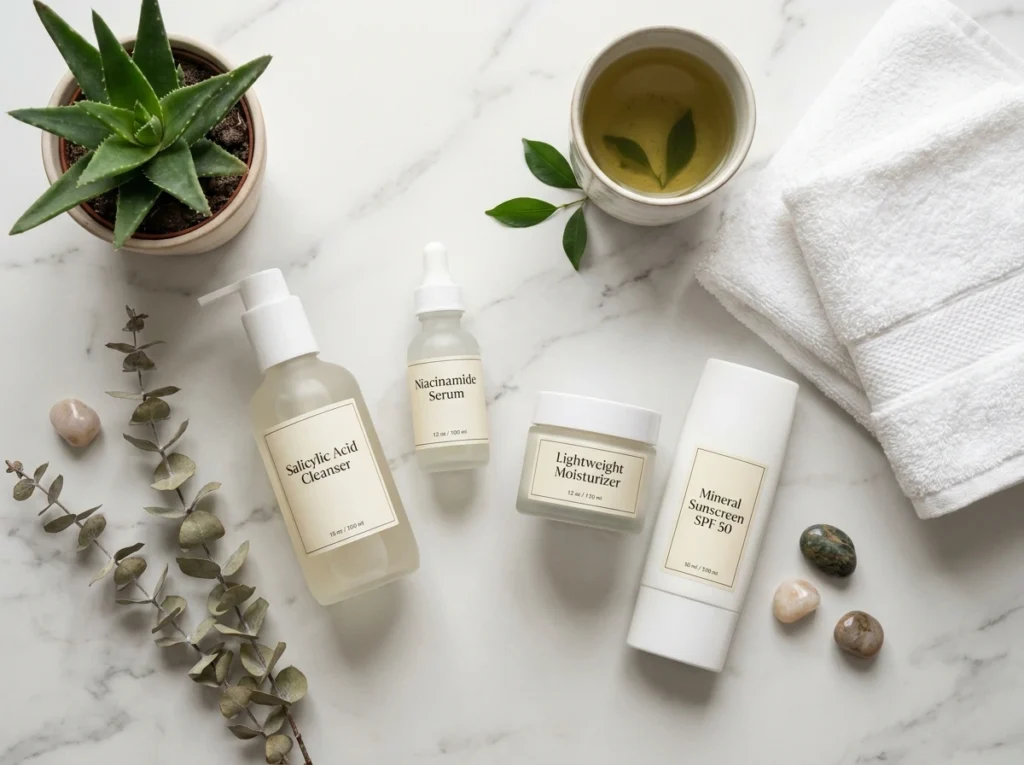
1. Salicylic Acid
Salicylic acid is one of the most popular ingredients for acne-prone skin.
Benefits
- Unclogs pores
- Removes excess oil
- Helps reduce blackheads
- Improves skin texture
Salicylic acid is oil-soluble, allowing it to penetrate inside pores.
2. Niacinamide
Niacinamide (Vitamin B3) is suitable for nearly every skin type.
Benefits
- Reduces redness
- Supports the skin barrier
- Helps regulate oil production
- Improves uneven skin tone
It pairs well with many other skincare ingredients.
3. Azelaic Acid
Azelaic acid is a gentle ingredient often recommended for acne-prone and sensitive skin.
Benefits
- Helps reduce blemishes
- Improves post-acne marks
- Reduces redness
- Promotes a more even complexion
4. Benzoyl Peroxide
Benzoyl peroxide helps reduce acne-causing bacteria on the skin.
Benefits
- Targets inflammatory acne
- Helps prevent new breakouts
- Reduces bacteria on the skin
Start with a lower concentration to minimize dryness and irritation.
5. Retinoids
Retinoids help improve skin cell turnover.
Benefits
- Helps prevent clogged pores
- Improves skin texture
- Reduces acne over time
- Supports smoother-looking skin
Introduce retinoids gradually, especially if you have sensitive skin.
6. Hyaluronic Acid
Acne-prone skin still needs hydration.
Benefits
- Deeply hydrates
- Supports the skin barrier
- Reduces dryness caused by acne treatments
- Leaves skin feeling soft
7. Ceramides
Ceramides are natural lipids that strengthen the skin barrier.
Benefits
- Prevent moisture loss
- Reduce irritation
- Support skin recovery
- Improve barrier function
8. Zinc
Zinc is commonly found in cleansers and lightweight serums.
Benefits
- Helps control excess oil
- Soothes the skin
- Supports healthy skin function
9. Sulfur
Sulfur has long been used in skincare for oily and acne-prone skin.
Benefits
- Helps absorb excess oil
- Supports clearer pores
- Reduces the appearance of blemishes
Sulfur is often found in spot treatments and masks.
10. Green Tea Extract
Green tea is rich in antioxidants and soothing plant compounds.
Benefits
- Helps calm redness
- Provides antioxidant protection
- Supports healthier-looking skin
11. Centella Asiatica
Also known as Cica, Centella Asiatica is valued for its soothing properties.
Benefits
- Helps calm irritation
- Supports skin repair
- Reduces redness
It pairs well with stronger acne treatments.
12. Panthenol (Vitamin B5)
Panthenol is a hydrating ingredient that supports the skin barrier.
Benefits
- Moisturizes the skin
- Helps reduce dryness
- Supports recovery after irritation
13. Kaolin Clay
Kaolin clay is commonly used in face masks.
Benefits
- Absorbs excess oil
- Helps clean pores
- Leaves skin feeling refreshed
Use once a week for oily skin.
14. Glycerin
Glycerin is one of the most effective moisturizing ingredients.
Benefits
- Attracts moisture
- Helps prevent dehydration
- Supports healthy skin
It works well in cleansers and moisturizers.
15. Allantoin
Allantoin is a soothing ingredient suitable for sensitive and acne-prone skin.
Benefits
- Calms irritation
- Softens rough skin
- Supports skin healing
Ingredients to Use Carefully
Some ingredients can be helpful but may cause irritation if overused.
These include:
- Glycolic Acid
- Lactic Acid
- Vitamin C
- Retinoids
- Benzoyl Peroxide
Introduce only one new active ingredient at a time and monitor how your skin responds.
Ingredients That May Not Suit Acne-Prone Skin
While everyone’s skin is different, some people with acne-prone skin may prefer to avoid products that contain:
- Heavy oils that feel greasy
- Strong fragrances
- High concentrations of alcohol
- Harsh physical scrubs
Choosing non-comedogenic products may help reduce the likelihood of clogged pores.
Sample Routine Using These Ingredients
Morning
- Gentle Cleanser
- Niacinamide Serum
- Lightweight Moisturizer
- Sunscreen SPF 30+
Evening
- Salicylic Acid Cleanser (if suitable)
- Hydrating Serum
- Ceramide Moisturizer
Use stronger treatments like retinoids or benzoyl peroxide on separate evenings if recommended by a healthcare professional.
Common Mistakes to Avoid
Avoid these common skincare mistakes:
- Using too many active ingredients at once
- Over-exfoliating
- Skipping moisturizer
- Forgetting sunscreen
- Picking at pimples
- Frequently switching skincare products
Simple routines often produce the best long-term results.

Frequently Asked Questions
Which ingredient is best for acne-prone skin?
Salicylic acid is widely used because it helps unclog pores, while niacinamide is popular for balancing oil and reducing redness. The best choice depends on your skin type and concerns.
Can I use niacinamide every day?
Yes. Most people can use niacinamide once or twice daily as part of their regular skincare routine.
Should oily skin use moisturizer?
Absolutely. A lightweight, non-comedogenic moisturizer helps maintain the skin barrier and may prevent excessive oil production caused by dryness.
Can I combine acne ingredients?
Some ingredients work well together, but combining several strong active ingredients at once may increase irritation. Introduce new products gradually and seek professional advice if you are unsure.
Final Thoughts
Choosing the best ingredients for acne-prone skin is the foundation of an effective skincare routine. Ingredients such as salicylic acid, niacinamide, azelaic acid, ceramides, hyaluronic acid, and green tea extract can help keep pores clear, support the skin barrier, and improve your complexion when used consistently.
Remember that healthy skin takes time. Instead of using multiple strong treatments, focus on a balanced routine with gentle cleansing, lightweight hydration, daily sunscreen, and ingredients suited to your skin’s needs. If your acne is severe or persistent, consult a dermatologist for personalized treatment recommendations.