
How to Make Your Hair Grow Faster Naturally: 15 Proven Tips for Longer, Healthier Hair

Introduction
How to Make Your Hair Grow Faster Naturally ?
Many people dream of having long, thick, and healthy hair. Whether you’re recovering from a short haircut, dealing with breakage, or simply trying to grow your hair longer, it’s natural to wonder if there’s a way to speed up the process.
While there is no magic solution that can dramatically accelerate your hair’s natural growth rate, you can create the best possible conditions for healthy hair growth. Hair typically grows about 0.5 inch (1.25 cm) per month, although this varies depending on genetics, age, hormones, and overall health.
The good news is that healthy habits, proper scalp care, balanced nutrition, and gentle hair care can reduce breakage and help your hair reach its maximum potential length.
In this guide, you’ll learn how to make your hair grow faster naturally, discover the best daily habits, and build a routine that supports stronger, healthier hair.
Table of Contents
How Hair Grows
Hair grows in three main stages:
Anagen (Growth Phase)
This is the active growth phase, which can last several years.
Catagen (Transition Phase)
Hair growth slows as the follicle prepares for the resting stage.
Telogen (Resting Phase)
The hair eventually sheds, making room for new growth.
Each hair follicle follows its own cycle, which is why hair sheds gradually rather than all at once.
What Affects Hair Growth?
Several factors influence how your hair grows:
- Genetics
- Age
- Hormones
- Nutrition
- Stress
- Overall health
- Hair care habits
- Heat and chemical damage
Although genetics largely determine growth speed, proper care can help minimize breakage and improve hair quality.
1. Eat Enough Protein
Hair is made primarily of a protein called keratin.
Include protein-rich foods such as:
- Eggs
- Fish
- Chicken
- Beans
- Greek yogurt
- Lentils
A balanced diet supports healthy hair growth.
2. Massage Your Scalp
A gentle scalp massage may improve blood circulation and create a relaxing self-care routine.
Massage your scalp with your fingertips for 5–10 minutes several times a week.
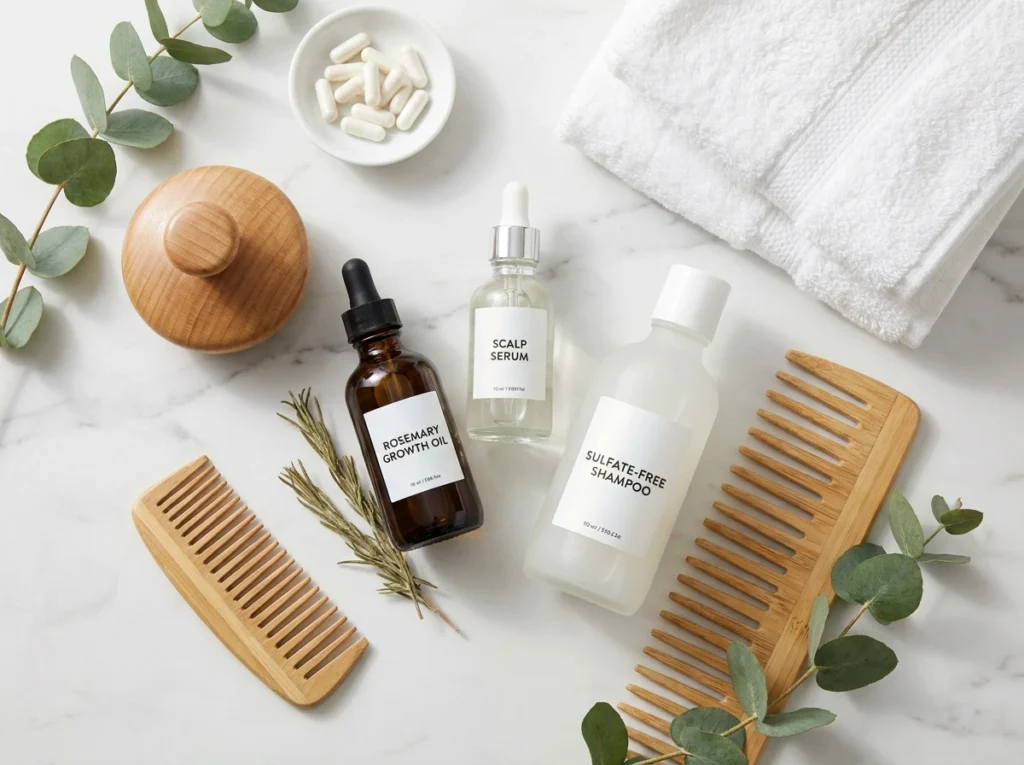
Some people like to use a diluted rosemary oil blend during scalp massage.
3. Keep Your Scalp Healthy
Healthy hair starts with a healthy scalp.
Wash your hair regularly based on your scalp type and remove excess oil, sweat, and product buildup without over-cleansing.
4. Use a Gentle Shampoo
Choose a shampoo that cleanses effectively without stripping away too much natural moisture.
Look for:
- Sulfate-free formulas (if they suit your hair)
- Moisturizing ingredients
- Products matched to your scalp type
5. Condition Every Wash
Conditioner helps reduce friction, improve softness, and minimize breakage.
Apply it mainly to the mid-lengths and ends of your hair.
6. Avoid Excessive Heat Styling
Frequent use of straighteners, curling irons, and hot blow dryers can weaken the hair shaft.
To reduce damage:
- Use a heat protectant
- Choose the lowest effective temperature
- Air dry when possible
7. Trim Split Ends
Regular trims don’t make hair grow faster from the scalp, but they help remove split ends that can travel up the hair shaft and lead to breakage.
Trim every 8–12 weeks, depending on your hair condition.
8. Stay Hydrated
Water supports your body’s normal functions, including maintaining healthy skin and scalp.
Drink water consistently throughout the day.
9. Try Rosemary Oil
Rosemary essential oil has gained attention for supporting scalp health. It should always be diluted in a carrier oil, such as jojoba or coconut oil, before application.
Use it as part of a scalp massage one or two times per week.

10. Sleep Well
Hair follicles, like the rest of your body, benefit from healthy sleep.
Aim for 7–9 hours of quality sleep each night.
11. Manage Stress
Long-term stress may contribute to increased hair shedding in some individuals.
Healthy stress-management techniques include:
- Walking
- Meditation
- Yoga
- Deep breathing
- Reading
12. Protect Your Hair While Sleeping
Reduce friction by:
- Sleeping on a silk or satin pillowcase
- Wearing a loose braid if you have long hair
- Avoiding tight hairstyles overnight
13. Avoid Tight Hairstyles
Hairstyles that pull tightly on the hair, such as tight ponytails or braids, may increase the risk of breakage and traction-related hair loss.
Choose loose, comfortable styles whenever possible.
14. Use Hair Oils Correctly
Hair oils don’t directly increase growth speed, but they can improve hair condition and reduce breakage.
Popular options include:
- Argan Oil
- Coconut Oil
- Jojoba Oil
- Rosemary Oil (diluted)
Apply mainly to the scalp (when appropriate) and hair lengths before shampooing or to the ends after washing, depending on the oil and your hair type.
15. Be Patient and Consistent
Healthy hair growth takes time.
Consistent care is more effective than trying many products at once or expecting overnight results.
Sample Hair Growth Routine
Morning
- Brush hair gently with a wide-tooth comb or soft brush
- Apply a lightweight hair serum to the ends if needed
- Protect hair from heat before styling
Evening
- Massage the scalp for 5 minutes (2–3 times per week)
- Apply a nourishing hair oil before wash days if desired
- Sleep on a silk or satin pillowcase
Weekly
- Deep conditioning treatment
- Clarifying shampoo if you use many styling products
- Scalp massage
- Hair oil treatment
Best Nutrients for Healthy Hair
A balanced diet provides nutrients that support normal hair growth.
Focus on foods rich in:
Protein
Supports the structure of hair.
Iron
Found in spinach, beans, and lean meats.
Zinc
Present in pumpkin seeds, seafood, and legumes.
Vitamin C
Supports collagen formation and helps with iron absorption.
Omega-3 Fatty Acids
Found in salmon, walnuts, and flaxseeds.
Vitamin D
Supports overall health, including normal hair follicle function.

Common Mistakes That Slow Hair Progress
Avoid these habits:
- Overusing heat tools
- Brushing aggressively
- Skipping conditioner
- Using harsh chemical treatments too often
- Tight hairstyles
- Ignoring scalp health
- Crash dieting or inadequate nutrition
Frequently Asked Questions
Can hair grow faster naturally?
You cannot dramatically change your natural hair growth rate, but healthy habits can reduce breakage and help your hair reach its full length potential.
Does cutting hair make it grow faster?
No. Trimming does not affect growth at the hair follicle, but it helps prevent split ends and breakage, making hair appear healthier over time.
Which oil is best for hair growth?
Diluted rosemary oil is commonly used to support scalp health. Carrier oils such as argan, jojoba, and coconut oil help moisturize the hair and reduce breakage.
How long does it take to notice healthier hair?
Hair grows gradually. Many people notice improvements in hair softness and reduced breakage within a few weeks, while visible length changes typically take several months of consistent care.
Final Thoughts
Learning how to make your hair grow faster naturally is less about finding a miracle product and more about building healthy daily habits. Nourishing your body with a balanced diet, keeping your scalp healthy, minimizing breakage, and protecting your hair from damage can all help you achieve stronger, longer-looking hair over time.
Remember that everyone’s hair grows at a different rate. Focus on consistency rather than quick fixes, and choose gentle hair care practices that support long-term hair health. With patience and the right routine, you can enjoy healthier, shinier, and more resilient hair.