
Best Hair Oils for Healthy Hair: 12 Natural Oils for Stronger, Shinier Hair
Introduction
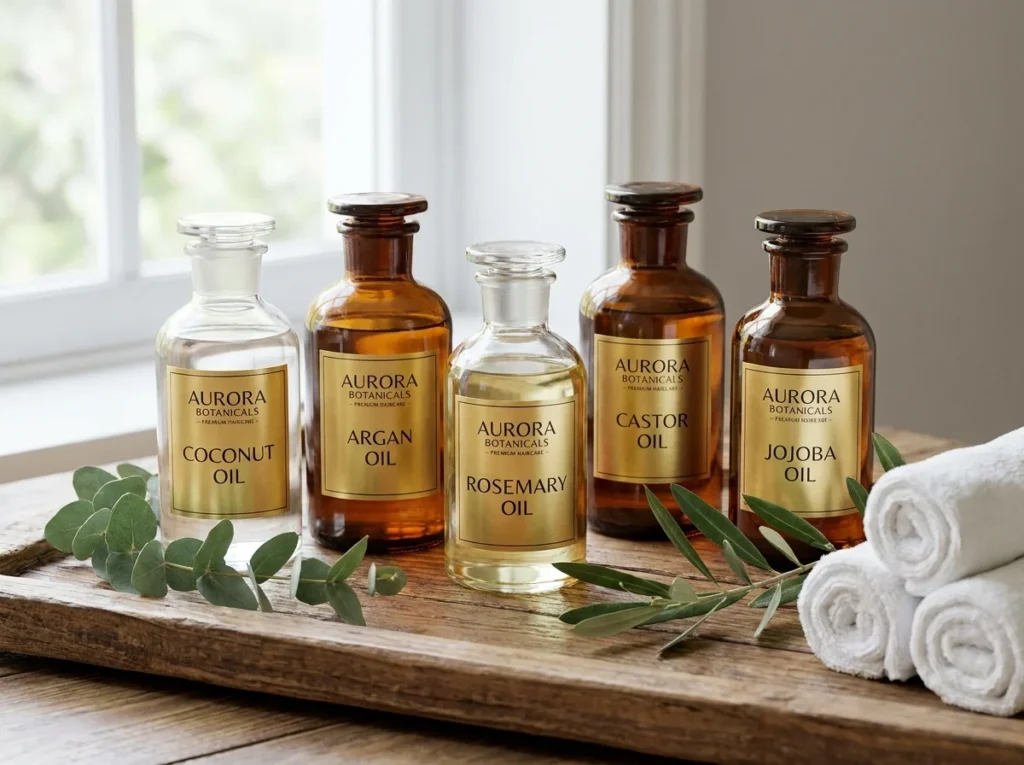
Healthy, shiny hair starts with consistent care, and one of the oldest beauty secrets is using natural hair oils. For centuries, people around the world have used plant-based oils to moisturize dry hair, reduce frizz, improve shine, and protect the hair from daily damage.
Although hair oils cannot magically make hair grow overnight or repair permanently damaged strands, they can help reduce breakage, support a healthy scalp, and improve the overall appearance of your hair. The key is choosing the right oil for your hair type and using it correctly.
In this guide, you’ll discover the best hair oils for healthy hair, their benefits, and how to build a simple hair oiling routine for stronger, softer, and shinier hair.
Table of Contents
Why Hair Oils Matter
Natural oils create a protective layer around the hair shaft, helping reduce moisture loss and minimize friction. Many oils also contain fatty acids, antioxidants, and vitamins that condition both the hair and scalp.
Using hair oils regularly may help:
- Improve shine
- Reduce frizz
- Minimize breakage
- Moisturize dry hair
- Support scalp health
- Protect hair from environmental damage
- Make hair easier to manage
1. Argan Oil
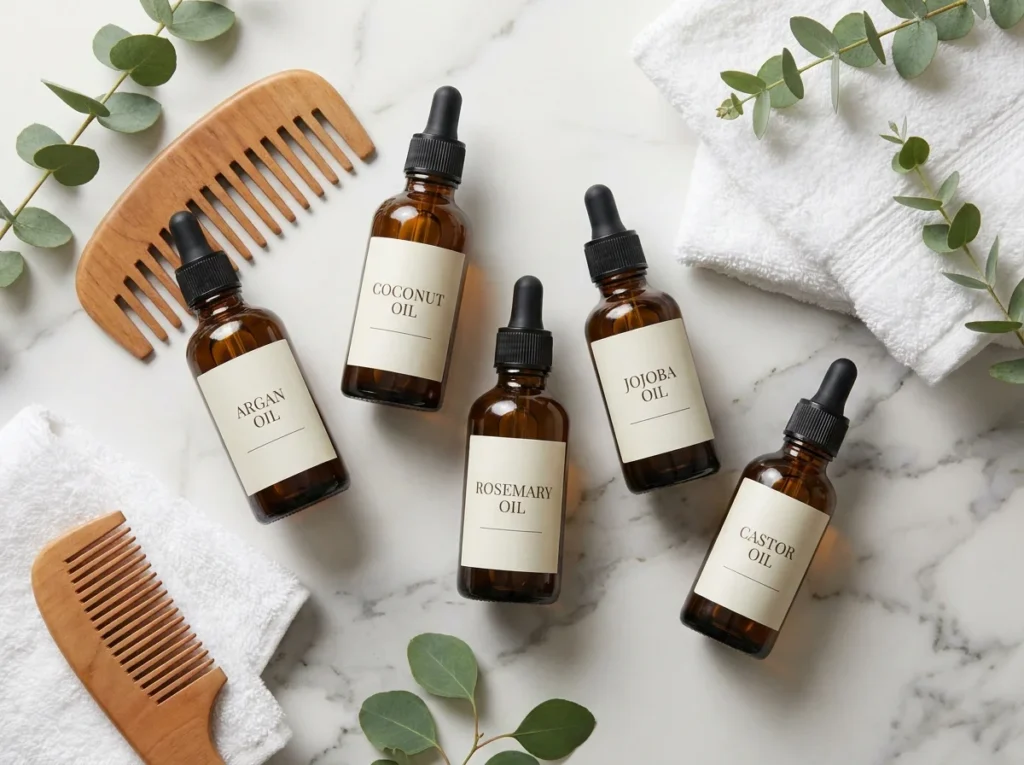
Often called “liquid gold,” argan oil is lightweight and suitable for most hair types.
Benefits
- Adds shine
- Reduces frizz
- Softens dry hair
- Helps protect against heat styling
- Rich in Vitamin E and antioxidants
Best For:
- Dry hair
- Color-treated hair
- Frizzy hair
2. Coconut Oil
Coconut oil is one of the most researched hair oils and is known for penetrating the hair shaft better than many other oils.
Benefits
- Reduces protein loss
- Helps strengthen hair
- Improves softness
- Supports moisture retention
Best For:
- Thick hair
- Dry hair
- Damaged hair
People with very fine hair may find it too heavy.
3. Rosemary Oil
Rosemary essential oil has become popular for scalp care. It should always be diluted in a carrier oil before applying to the scalp.
Benefits
- Supports scalp health
- May help improve hair density over time
- Refreshes the scalp
- Promotes healthier-looking hair
Best For:
- Thinning hair
- Oily scalp
- Healthy scalp maintenance
4. Jojoba Oil
Jojoba oil closely resembles the skin’s natural sebum.
Benefits
- Moisturizes without feeling greasy
- Helps soften the scalp
- Smooths dry hair
- Lightweight formula
Best For:
- Oily hair
- Fine hair
- Sensitive scalp
5. Castor Oil
Castor oil has a thick consistency and is commonly used in hair care routines.
Benefits
- Helps coat the hair
- Improves softness
- Reduces dryness
- Supports healthier-looking strands
Because it is thick, many people mix it with lighter oils.
Best For:
- Dry hair
- Thick hair
6. Avocado Oil
Avocado oil is rich in healthy fats and vitamins.
Benefits
- Nourishes dry hair
- Adds softness
- Helps reduce breakage
- Improves shine
Best For:
- Curly hair
- Damaged hair
- Dry hair

7. Olive Oil
Olive oil has been used for hair care for generations.
Benefits
- Deeply moisturizes
- Smooths frizz
- Adds shine
- Helps protect dry ends
Best For:
- Thick hair
- Coarse hair
- Dry hair
8. Grapeseed Oil
Grapeseed oil is lighter than many traditional oils.
Benefits
- Lightweight hydration
- Reduces frizz
- Adds shine
- Doesn’t leave heavy residue
Best For:
- Fine hair
- Oily hair
9. Sweet Almond Oil
Sweet almond oil contains Vitamin E and essential fatty acids.
Benefits
- Softens hair
- Reduces dryness
- Improves manageability
- Leaves hair silky
Best For:
- Normal hair
- Dry hair
10. Tea Tree Oil
Tea tree essential oil should always be diluted before use.
Benefits
- Helps maintain a healthy scalp
- Refreshes oily scalps
- Reduces product buildup
Best For:
- Oily scalp
- Flaky scalp
11. Baobab Oil
Baobab oil is rich in vitamins A, D, E, and essential fatty acids.
Benefits
- Deep hydration
- Improves elasticity
- Adds shine
- Softens brittle hair
Best For:
- Dry or damaged hair
- Curly hair
12. Marula Oil
Marula oil is a lightweight oil packed with antioxidants.
Benefits
- Smooths frizz
- Adds shine
- Helps protect hair from dryness
- Lightweight finish
Best For:
- Fine hair
- Color-treated hair
- Frizzy hair
How to Choose the Right Hair Oil
Fine Hair
Choose lightweight oils such as:
- Jojoba Oil
- Grapeseed Oil
- Marula Oil
Thick Hair
Choose richer oils such as:
- Coconut Oil
- Olive Oil
- Castor Oil
Dry Hair
Good options include:
- Argan Oil
- Avocado Oil
- Coconut Oil
Curly Hair
Try:
- Baobab Oil
- Avocado Oil
- Sweet Almond Oil
Oily Hair
Choose lightweight oils and apply mainly to the lengths rather than the scalp.

How to Oil Your Hair Properly
Step 1
Brush your hair gently to remove tangles.
Step 2
Warm a small amount of oil between your hands.
Step 3
Massage the oil into your scalp if appropriate for your hair type.
Step 4
Work the remaining oil through the mid-lengths and ends.
Step 5
Leave it on for 30 minutes to overnight, depending on the oil and your hair type.
Step 6
Wash with a gentle shampoo and follow with conditioner.
Common Hair Oiling Mistakes
Avoid these common mistakes:
- Using too much oil
- Applying essential oils directly without dilution
- Leaving heavy oils on fine hair for too long
- Skipping shampoo after heavy oil treatments
- Using dirty brushes or combs
- Over-oiling several times a week
For most people, oiling 1–2 times per week is sufficient.
Frequently Asked Questions
Which hair oil is best for dry hair?
Argan oil, coconut oil, avocado oil, and olive oil are popular choices for adding moisture and reducing frizz.
Can hair oils make hair grow faster?
Hair oils do not directly speed up hair growth. However, keeping the scalp healthy and reducing breakage may help hair retain its length over time.
How often should I oil my hair?
Most people benefit from using hair oil once or twice a week. Fine hair may require less frequent treatments than thick or curly hair.
Should I apply hair oil to wet or dry hair?
Both methods can work. Applying a small amount to damp hair helps lock in moisture, while using oil before shampooing can provide a nourishing pre-wash treatment.
Final Thoughts
Choosing the best hair oils for healthy hair depends on your hair type, texture, and individual needs. Lightweight oils like jojoba, grapeseed, and marula work well for fine or oily hair, while richer oils such as coconut, avocado, and olive oil are excellent for dry or thick hair. Essential oils like rosemary and tea tree can also support scalp care when properly diluted.
Remember that healthy hair comes from a combination of consistent care, balanced nutrition, gentle styling, and a well-planned routine. With regular use and the right techniques, natural hair oils can help your hair look softer, shinier, and healthier over time.